*UPDATE: Sorry, but it doesn't appear that this video will play due to various 'issues'. Dunno why Youtube plays tons of copyrighted material but not this. Oh well.
I've been on a bit of a James Bond kick these past few week, specifically analyzing five of the first six films.
Watching the early Bond film adaptations in the order as they were written; From Russia With Love, Dr. No, Goldfinger, Thunderball and On Her Majesties Secret Service is a fantastic viewing experience to watch the progression of a very human James Bond. The only issue is the reversed order of the first two films films From Russia With Love and Dr. No.
Dr. No (1962) was the very first Bond film. Without any disrespect to a great film and though it had many of the elements that would later be expanded upon in the future Bond films, it lacked some of the polish that showed up in the second film (From Russia), most notably, the full John Barry score and the infamous pre-credit sequence. It becomes quite apparent watching Dr. No after From Russia.
So I created a edit of Dr. No with a pre-credit sequence and a new score over the title credits. I never liked the looped James Bond theme which eventually breaks into "The Three Blind Mice"during the Dr. No titles. Though it blends in with the first scene of the three blind assassins, the lightness and comical attitude breaks the thrill of the Bond film especially placed second in the film sequence.
The music I placed there instead was an unused track from the Dr. No soundtrack which fit quite nicely into the sequence and keeps the mood a bit darker and dramatic (or so I felt). Ironically, it too is called James Bond Theme but it was only an early version of the theme.
So placing Dr. No as the second film with this edited pre-credit sequence I think helps smooth the transition between the new sequence. I'd be curious for your opinion on this too.

Showing posts with label James Bond. Show all posts
Showing posts with label James Bond. Show all posts
Wednesday, October 12, 2011

Friday, September 30, 2011
The Bond Films In A New Light
I've been a huge fan of Ian Fleming's James Bond novels since I was in junior high. Of course, prior to that I loved watching the movies as they were replayed on television. At the time, they were all the Connery films and the first two Moore pix, Live and Let Die and The Man With The Golden Gun.
But the first time I read Fleming's original novel, I believe it was Dr. No, I was blown away! The character and story seemed so much different then the invincible, gadget heavy, overly promiscuous secret agent of the films. The character in the novels was much more human, and vulnerable. He wasn't the blockbuster 'superhero' but a deep cover secret agent up to his neck in cold war espionage.
Out of the 22 Bond films produced (with six actors playing the lead) only a mere five followed Fleming's novels; From Russia With Love, Dr. No, Goldfinger, Thunderball and On Her Majesty's Secret Service. The rest were lifted in title and character only with screenwriters taking the stories into their own directions (with mixed results).
These five novels were adapted into film in almost the exact order that Fleming wrote them and with only minor changes to the stories, with the exception of Dr. No and From Russia being reversed. These five films are often thought of the pinnacle of the Bond 'franchise' and indeed they are.
What if these were the only Bond films made? What if we reversed Dr. No and From Russia With Love and place them in the order that the books were released? What I think we end up with is a very human character and a thrilling short and sweat franchise that builds up to an appropriate climax.
These 5 films, in the order they were released as novels, complete a full story arc of the Bond character and also fixes some continuity errors in the films (while adding a few). It displays an agent with human weaknesses and emotions and a villain that builds over the five films as well. Also, director Terrence Young would be director on three of the five films while Peter Hunt would edit all of films and direct OHMSS. Also, screenwriter Richard Miabaum would adapt all of the related books to film. All this helped unify this five film series.
So getting past the minor issues with reversing Dr. No and FRWL we come in as spectators in the middle of Bond's career in the order of the novels. The first four novels; Casino Royale, Live and Let Die, Moonraker and Diamonds Are Forever; though great cold war spy thrillers themselves, built up to the middle novels where you get the grandiose villains of Dr. No, Goldfinger and SPECTRE.
So we start with the movie....
From Russia With Love
Our intro to James Bond as he is the victim of an assignation attempt, fights for his life (the hand to hand with Robert Shaw is one of the best fight scenes ever) and nearly dies at the end of the film (as in the novel though the reader actually doesn't know if he survives). The only gadget is a fancy brief case. This film will introduce the Bond character (quite late into the film) as well as SPECTRE and it's leader Blofeld (and his infamous white cat). Bond must be a bad-ass if this organization would want him out of the way. We're coming into the middle of the character's story, remember. Think if it as Episode IV: A New Hope. Here Bond still believes that he is fighting his cold-war rivals SMERSH, which will fit well with the plot of stealing the Russian Lektor, but is introduced to SPECTRE . It shows SPECTRE to be a international organization. Also, the late John Barry completes the entire score for this film and along with the infamous pre-credit sequence solidifies the Bond film right from the start. And the exotic European locations fill out the foundation of a Bond story. Minor continuity issues would involve SPECTRE's mention of Dr. No and his defeat at the hands of 007 but one could look at it as a precursor to the next film in the 'series'. SPECTRE want's Bond out of the way so that their operation with Dr. No can go on without a hitch. The other is Sylvia Trench, a woman whom Bond 'met' in the film Dr. No and is seemingly having a long term relationship with at the beginning of FRWL. Trench mentioned Bond's trip to Jamaica.
Dr. No
SPECTRE's first big plot with the series' first colorful villain Dr. No, mechanical hands and all. Bond comes out of this story beat to hell and tattered in rags but, of course, with Honey Rider in his arms. No gadgets at all - man vs man. Dr. No will again introduce Bond to SPECTRE. Famous for being the only Bond film without a pre-credit sequence, placing this movie second may prove to have an abrupt bump after the more polished FRWL. Minor continuity issue would involve Sylvia Trench, mentioned above, whom Bond 'meets' for the first time in the casino at the beginning of the film. A minor re-edit at the beginning to add the typical Bond walk barrel shot and the scene involving the Three Blind Mice assassins killing Strangways and his secretary would serve well as the pre-credit sequence. From there the movie can roll without a hitch.
Of course the first two films can be viewed in their original release order but there's something about watching FRWL first that makes the beginning of the series quite intriguing.
Goldfinger
Of these five films, it is here that the Bond character reaches his heroic peak and would also be the only film to not directly involve SPECTRE which gives some breath to the series and builds the return of the SPECTRE threat into the final two films (as they recover from their failure Dr. No?). Though he fights for his life against the colorful Oddjob and Goldfinger, the plot consisting of creating economic chaos by irradiating the gold in Fort Knox is still human is scale. Here, however, Bond comes out unscathed and smelling like roses.
Thunderball
Here we begin the two part conclusion to the series. SPECTRE reaches it's full potential of a world-wide blackmailing terrorist threat with the abduction of two nuclear weapons. Bond actually gets shot and bleeds running for his life from Largo's agents in a memorable scene filmed during the Junkanoo celebration in Nassau. Again, less myth and a more human character in the midst of a world threatening plot though it is pretty spectacular. All this brings us to….
 On Her Majesty's Secret Service
The finale of this five film Bond series (skipping the film You Only Live Twice). Again, SPECTRE is involved and Bond comes face to face with it's leader, Ernst Stavro Blofeld, for the first time (as does the viewer). But the key here is that Bond falls in love and actually marries giving more depth to some of his romantic entanglements in the earlier films. Of course we all know that this doesn't end well and thus ends the series on a very human level. Major continuity issue solved, however. In the movie You Only Live Twice, which came out in 1967, two years before OHMSS, Bond meets Blofeld face to face for the first time. In that continuity, though Bond has already met Blofeld, in this film they act as if meeting for the first time staying true to the novel but disrupting the film continuity. Removing YOLT from this 5 film series fixes that continuity problem. Also, this would be the only time that anyone sees Blofeld. No issues with multiple actors playing this villain (Donald Pleasence and Charles Grey) but, of course, we have George Lazenby replacing Connery as Bond.
This would be the end of the series as no Bond film again ever truly tackles a Fleming novel nor brings a sense of vulnerability to this 'super' agent. Nor does a film ever touch upon the death of his wife with the brief exception of a small scene in For Your Eyes Only where Moore places flowers upon the grave of his beloved. Other than that, Bond becomes the super-hero.
These five adaptive films, in the order that they were written in, present a story arc of a thrilling spy facing real death and real life.
I think it would be a fun exercise to watch these five films in this order which I'm currently in the process of doing.. If you're a true Ian Fleming James Bond fan I think you might enjoy it too.
Tuesday, April 12, 2011
Sean Connery 007 Number One!
Yes, it's official. Sean Connery gave the world the number one portrayal of Ian Flemming's iconic British secret agent James Bond 007 as voted by you visiting Warlocks!

Now, there is no doubt that Connery brought to the screen character a certain suave fortitude and a sense of class that has never quite been matched. But there were many other elements that brought that character to life on the screen and solidified the early Bond films and influenced the entire genre of the 1960's spy.
When talking about those early films starting with Dr. No (1962) and going all the way up to Diamonds Are Forever (1970) it would be impossible to not mention the other three pillars of this series; music composer John Barry and production designer Ken Adams and James Bond creator himself, Ian Flemming
Scenery, Scenery, Scenery
The production design of Ken Adams helped define the mod space in which our British Agent faced his foes and bedded his women. Adams use of a sleek spacious modern architecture being sure to include the ceiling (rare for the time period) and forced perspective added a sense of spectacular realism and power to both the good and the evil. Many of the sets in the early films left just as much of an impression with the viewer as did the beautiful women and the action. Scenes depicting Goldfinger's Kentucky ranch or SPECTRE's headquarters or even the unforgettable rocket launchpad beneath a volcano (with an actual rocket!) bound Bond in the 60's.


Adams would be brought back in the later Bond films form time to time and you'd always be able to catch his style. But his edgy sets from the 60's defined not only a genre but an era.
Double 'O' Music
The other consistent element in these early Bond films were the scores written by John Barry. His sweeping violins contrasted nicely with his modern swinging jazz sounds of drums, trumpet and electric guitar. Barry's sounds added that level of class, sex-appeal and action that rounded out the film version of the characters and situation. Though he didn't score the theme for the first film Dr. No, he did compose the famous guitar / horn blasting James Bond theme (often attributed to Monte Norman). His themes for Goldfinger, Thunderball and Diamonds Are Forever (as well as the others) carried the viewer to the far exotic locals where Bond would face off with the deadly agents of SPECTRE.
John Barry would be brought back for many of the modern Bond films in the 70's and beyond. John Barry passed away earlier this year.
Words, Bond's Words
 It would be impossible to write about James Bond without mentioning his creator Ina Flemming. Flemming's novels were violent, sexy and quite thrilling as the movies were to become but always ground in a certain realism (which the later films parted with). The development of the character which continued from book to book with the classy pulp style of Flemming wasn't afraid to take chances with his character making him quite human and vulnerable to love and death. One major aspect of these early James Bond films were they're close adherence to the original Flemming novels. Of the first seven films, five of them remained quite true to the novels (Dr. No, From Russia With Love, Goldfinger, Thunderball and On Her Majesties Secret Service) which helped solidify the film character. The other two films, You Only Live Twice and Diamonds Are Forever, parted from the novels taking only the title and the villain and going off into more fantasy adventures (which defined all the films from the early 70's onward). The books were thrilling cold-war spy dramas and the early films, although updated somewhat to the 1960's, enhanced that with the actor, music and set design and set the tone for action films to come.
Perhaps one of these other actors could have carried the early films as well as Connery. With the aid of Barry, Adams and Flemming himself it's possible that could have been the case. It was done with On Her Majesties Secret Service staring George Lazenby (a Bond film fan favorite that perhaps could have been better played by Connery?), but Connery's charisma and natural class cemented him and the series into the exploding pop culture of the 60's.
And to help you get through your Tuesday, the Bond girls
Friday, April 8, 2011
Poll: Who's Your Bond, James Bond
It's poll time again (keep it clean ya dirty grognards!)
While Ian Fleming's Bond novels (written between the early 1950's through the early 1960's) fit perfectly well within the gritty pulp genre the films take off in unexpected and sometimes absurd directions. Always with a dose of action, beautiful women (some much smarter than others) and intrigue, the Bond films are always anchored around the leading man played by more than eight actors spanning almost 50 years.
So today we come to one of the most controversial questions in pop history;
Who gave the best portrayal of Ian Fleming's iconic British secret agent James Bond, 007?
1. Barry Nelson
First appearance of James Bond US Television 1953 - clip


2. Sean Connery
Set the standard by which all other Bonds would be judged. -clip


3. George Lazenby
Ausie British Secret Agent
Clip


4. Roger Moore
Cigar smoking suave -Clip


5. Timothy Dalton
Was actually asked to play Bond in 1969 for OHMSS but HE felt he was too young. - Clip


6. Pierce ("I though Christmas came only once a year") Brosnan
Clip


8. Daniel Craig
Clip


10 David Niven
(blame YouTube/Google for the ad) Clip


11. Peter Sellers
Clip


12. Mike Meyers
(okay, so it's Austin Powers) - Clip

13. Secret Squirrel
Have fun it's Friday - Clip

As usual, you can vote Chicago style.

First appearance of James Bond US Television 1953 - clip


2. Sean Connery
Set the standard by which all other Bonds would be judged. -clip
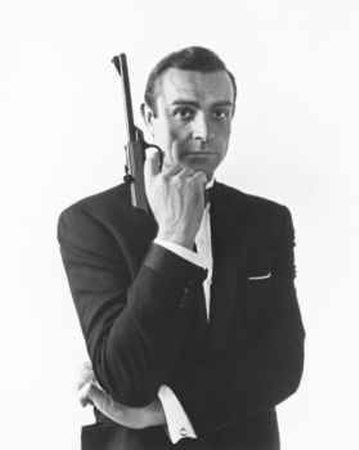

3. George Lazenby
Ausie British Secret Agent
Clip


4. Roger Moore
Cigar smoking suave -Clip


5. Timothy Dalton
Was actually asked to play Bond in 1969 for OHMSS but HE felt he was too young. - Clip


6. Pierce ("I though Christmas came only once a year") Brosnan
Clip


8. Daniel Craig
Clip


10 David Niven
(blame YouTube/Google for the ad) Clip


11. Peter Sellers
Clip


12. Mike Meyers
(okay, so it's Austin Powers) - Clip

13. Secret Squirrel
Have fun it's Friday - Clip

As usual, you can vote Chicago style.

Tuesday, February 1, 2011
Composer John Barry: November 3, 1933 – January 30, 2011
 One of cinema's greatest composers, John Barry, passed this weekend. His film compositions include an incredible range of subjects from Giant Apes (King Kong) to the American plains (Dances With Wolves) to Sci-Fi opera (Starcrash) and to British Secret Agents (11 James Bond soundtracks). He has won 5 Acadamy Awards but for me he defined the swank and sophistication of the 1960 spy thrillers with his unforgettable James Bond soundtracks. His influences can be heard in much of the Trip-hop music from the 90's including Portishead and The Sneaker Pimps.
Being a huge James Bond (Connery) fan his soundtracks have left a everlasting impression on me and define that era.
His sound and vision of film will indeed be missed.
Subscribe to:
Posts (Atom)